 Skip to content
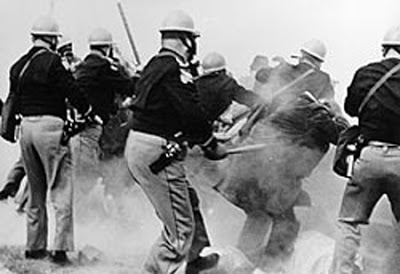
Policing has a tumultuous history in the United States. While the theoretical notion is honorable: protecting and serving a community and maintaining the rule of law, the actual functioning of the police has always been vulnerable to corruption and misaligned incentives. Law enforcement has mostly rid our lives of gangs, mobs, and other forms of organized crime, and for that, we should be forever grateful, but we cannot allow them to slip into the very things we pay them to combat.
Policing today is far too focused on minor crime. As much as 70% of all interactions police have are traffic stops, and most people have experienced a traffic stop at least once. While obeying the rules of the road is important, driving as a transportation system, and especially how we set speed limits, is particularly apt to encourage law-breaking. There is a reason that when most government forms and applications ask if you’ve ever been caught committing a crime, they exclude driving offenses. There are better methods of keeping roads safe than increasing police presence.
Today, policing has a number of bad systems that lead to perverse incentives. These include Civil Asset Forfeiture, Policing for Profit through fines, and Quotas / Arrest reward systems. These systems all create a method for police departments, or even officers individually, to benefit from making someone’s life worse. A justice system should avoid unnecessary harm and serve to help its citizens wherever possible.
Civil Asset Forfeiture is a process in which police departments can seize ownership over property if they have probable cause to believe it was involved in a crime. Police across the country regularly use this system to seize all kinds of everyday objects, from cash to people’s homes. Police often seize cash using this system by saying that because a drug can be detected on it, that indicates probable cause, despite almost all US currency being detectable for drugs. I believe this is clearly a violation of the 5th amendment and should be made illegal in Maryland.
Violation fines often go to enrich departments and create a profit motive towards policing as a system. Most people should never have to be given a punishment by the justice system because the laws should be natural to follow. When someone should be given a punishment, it should be meaningfully punitive to that individual, not something a rich individual can shrug off. As they say, if the punishment is a fine, it’s only a crime for the poor. I’m not sure if there is a space for fines as an enforcement mechanism, but we definitely should not allow police departments to be enriched from those fines, and therefore have an incentive to increase enforcement.
Drunk driving is a scourge on this country. It is also a habit in this country. To combat it, we have given up many things, from an 18-year-old age limit to 4th amendment protections in drunk driving checkpoints. The worst process that has come about is the awards given by private organizations to officers for making DUI/DWI arrests. These awards are given to officers who hit specific quotas for arrests for specific crimes, even if that arrest is found to be bad and the person isn’t convicted. These can end up functioning like official arrest quotas. Despite being illegal in Maryland and most other states, some local departments have been caught using arrest and ticket quotas themselves!
Ultimately, we need a culture change in policing away from thinking that citizens are the enemy, to real public service. Police need to be trained to de-escalate when possible, help people when they can, and be, to most people, a positive force in our community. We should feel a sense of comfort when we see the police, not a sense of apprehension.